Riboswitch mediated attention of T7 RNAP
The ability to induce gene expression in a small molecule dependent manner has led to many applications in target discovery, functional elucidation and bio-production. To date these applications have relied on a limited set of protein-based control mechanisms operating at the level of transcription initiation. The discovery, design and reengineering of riboswitches offer an alternative means by which to control gene expression (PNAS 2010, Angew. Chem. 2012). Subsequently, we developed a novel tunable recombinant expression system, termed RiboTite, which operates at both the transcriptional and translational level (Nucleic Acids Research 2016, Molecular BioSystems 2016). Using standard inducible promoters and orthogonal riboswitches, a multi-layered modular genetic control circuit was developed to control the expression of both bacteriophage T7 RNA polymerase and recombinant gene(s) of interest.
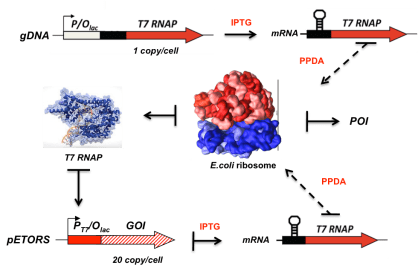
The system was benchmarked against a number of commonly used E. coli expression systems, and shows tight basal control, precise analogue tunability of gene expression at the cellular level, dose-dependent regulation of protein production rates over extended growth periods and enhanced cell viability. This novel system expands the number of E. coli expression systems for use in recombinant protein production and represents a major performance enhancement over and above the most widely used expression systems.
Tuning expression to match secretion capacity
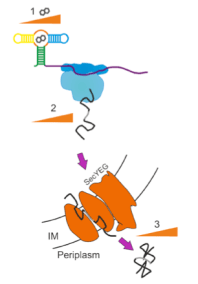
The secretion machinery of E. coli has a limited capacity and can become overloaded, leading to cytoplasmic retention of product; which can negatively impact cell viability and biomass accumulation. Fine control over recombinant gene expression offers the potential to avoid this overload by matching expression levels to the host secretion capacity. We previous reported the application of the RiboTite gene expression control system to achieve this by finely controlling cellular expression levels. The level of control afforded by this system allows cell viability to be maintained, permitting production of high-quality, active product with enhanced volumetric titres (Microbial Cell Factories 2018.
Excretion of cytoplasmic proteins
The production of recombinant protein is powerful technique widely employed in biology research labs around the world and for the industrial-scale production of therapeutic proteins and industrial enzymes. A major component of the manufacturing cost of these products is associated with extraction of the product from the host production cells, and isolation and purification procedures. This has a major impact upon the affordability and equitable global access to biologic-medicines once off patent, as the high manufacturing cost limits possible price reductions when compared to small-molecule generic medicines.
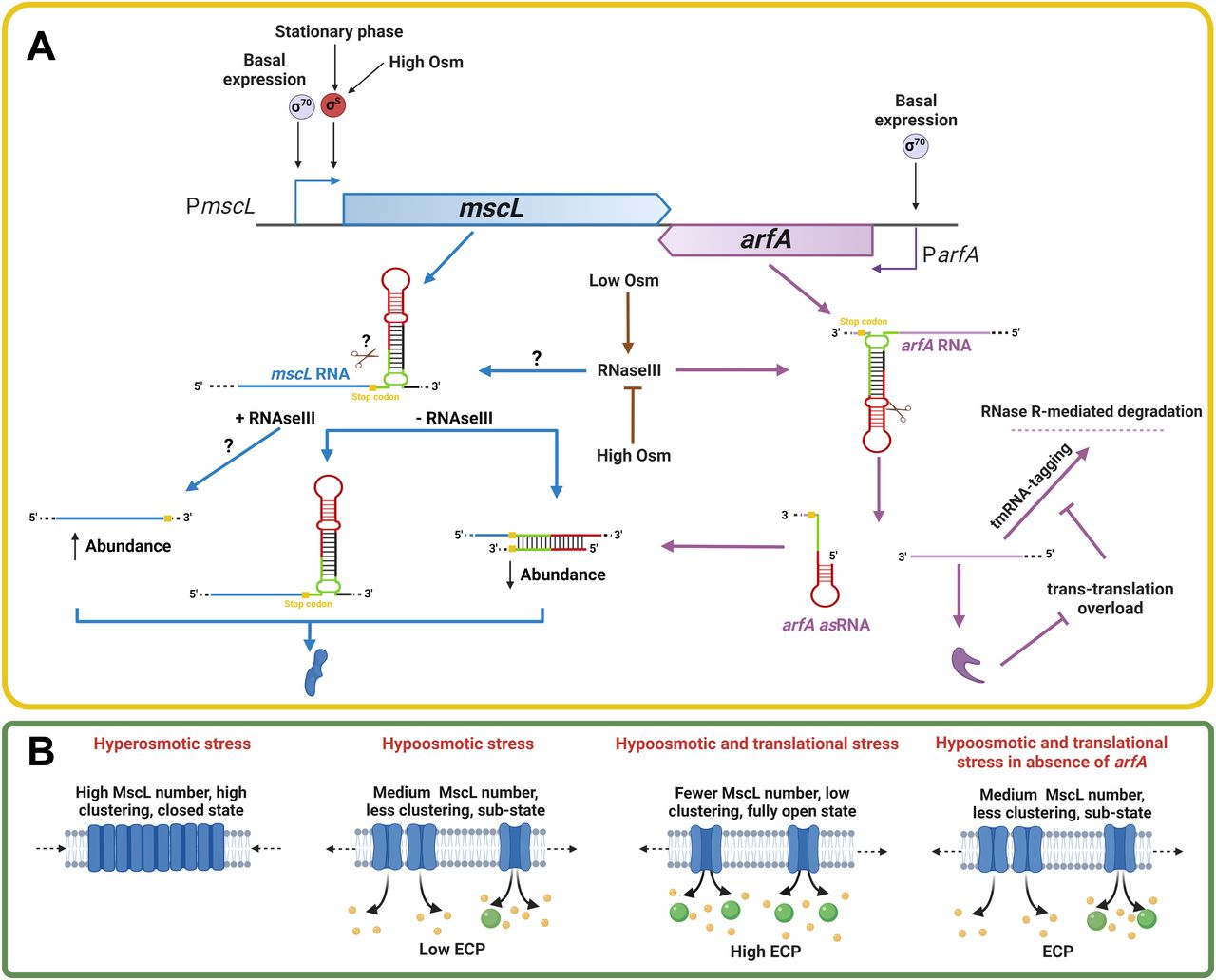
The apparent mislocalization or excretion of cytoplasmic proteins is a commonly observed phenomenon in both bacteria and eukaryotes. However, reports on the mechanistic basis and the cellular function of this so-called “nonclassical protein secretion” are limited. We recently reported that protein overexpression in recombinant cells and antibiotic-induced translation stress in wild-type Escherichia coli cells both lead to excretion of cytoplasmic protein (ECP) (mBio 2018). The productivity of this excretion has been shown to be comparable to classical secYEG-mediated secretion in E. coli; this provides a novel cellular export paradigm for potential industrial-scale protein production.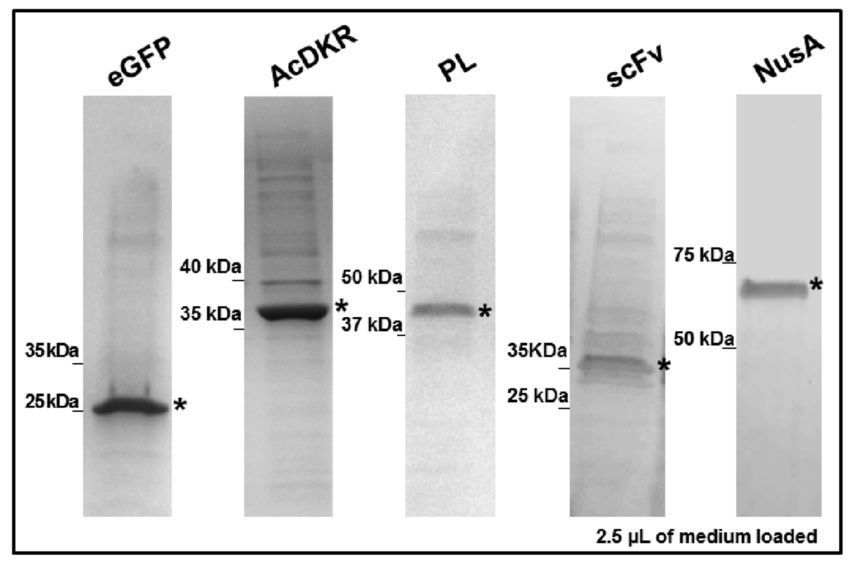 In response to hypoosmotic shock and ribosome stalling in Escherichia coli, ECP is dependent upon the presence of the large-conductance mechanosensitive channel and the alternative ribosome–rescue factor A gene products. Recently we reported that the corresponding mscL and arfA genes are commonly co-located on the genomes of Gammaproteobacteria and display overlap in their respective 3′ UTR and 3′ CDS. We show this unusual genomic arrangement permits an antisense RNA–mediated regulatory control between mscL and arfA, and this modulates MscL excretory activity in E. coli. These findings highlight a mechanistic link between osmotic, translational stress responses and ECP in E. coli, further elucidating the previously unknown regulatory function of arfA sRNA (Life Science Alliance 2023).
 DIXON LAB