By: Ling-Li Boon
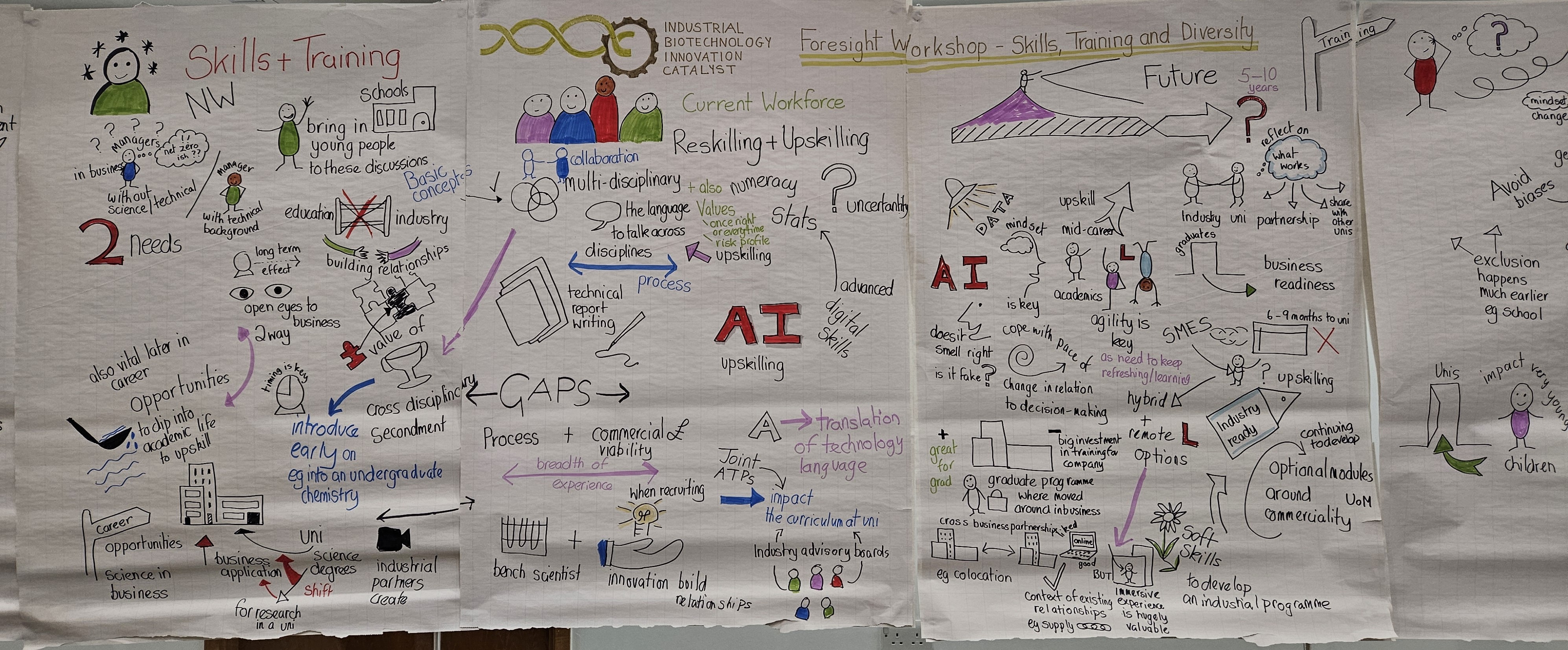
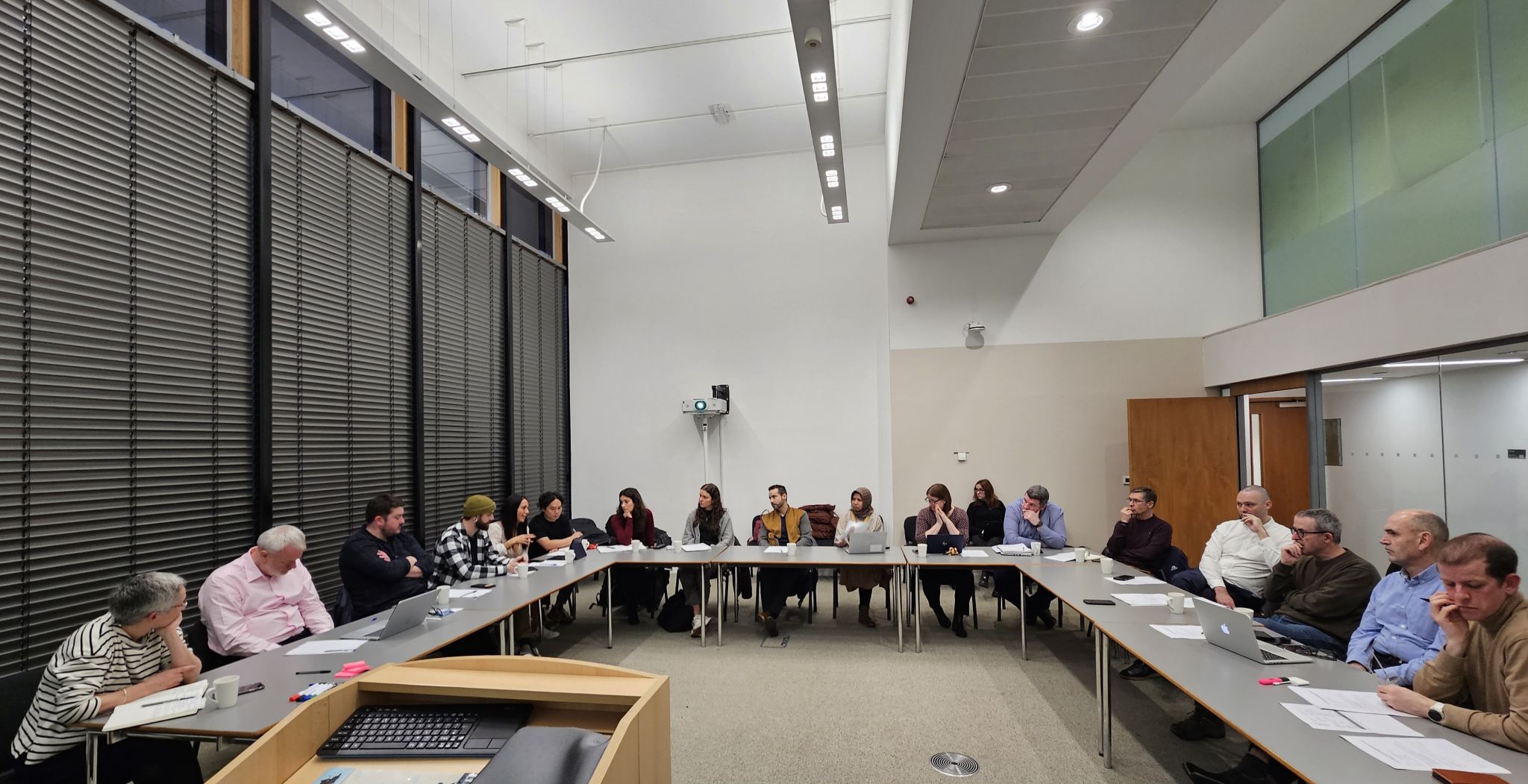
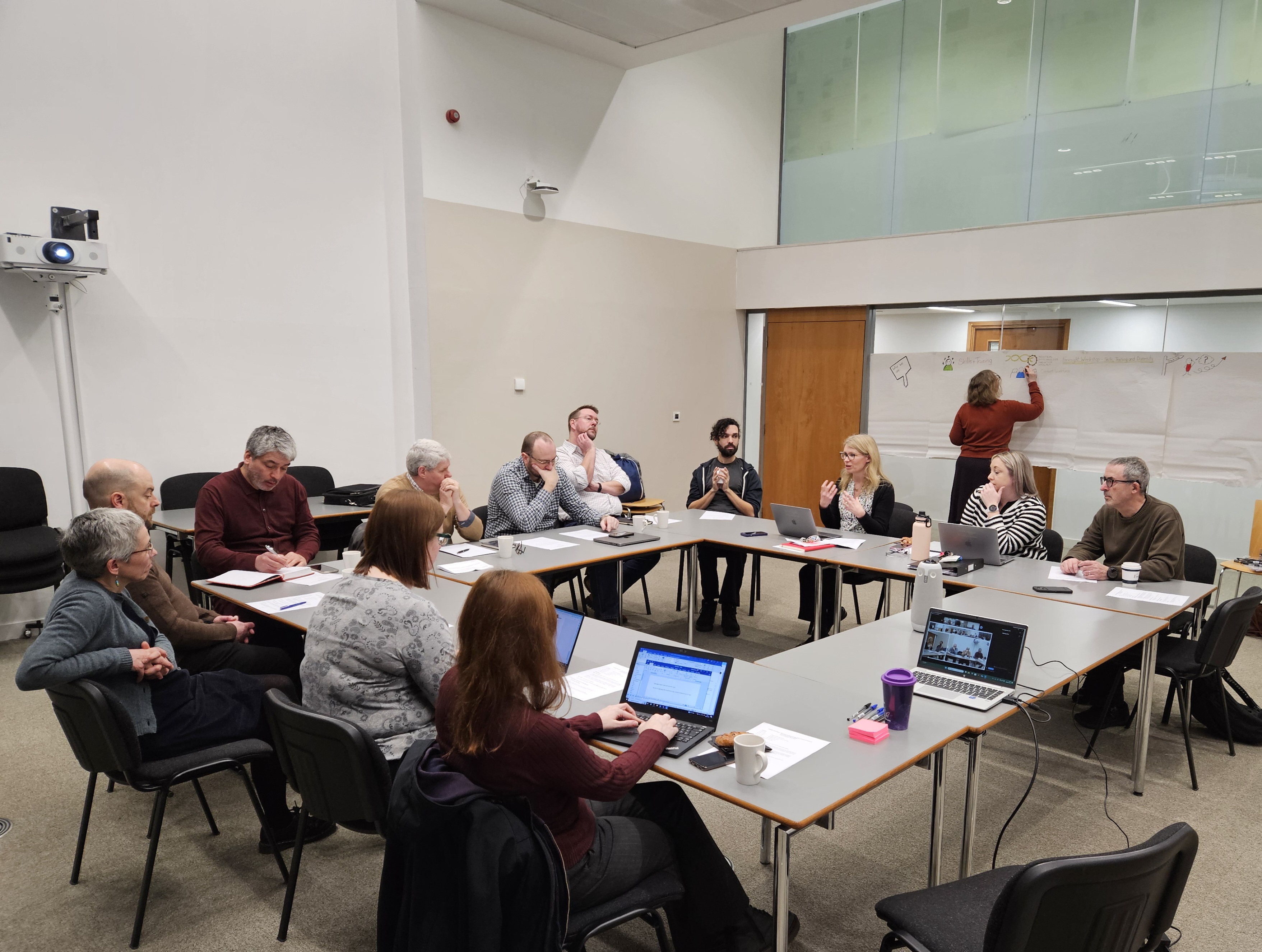
Three foresight workshops were held at the Manchester Institute of Biotechnology, as part of the UMRI-funded project “Pathways for Sustainable Biomanufacturing Futures”, with 37 participants, ranging from manufacturers, end-users, policymakers, trade associations and academic researchers.
The University of Manchester Research Institute (UMRI)-funded project- “Pathways for Sustainable Biomanufacturing Futures” aims to develop thought-leadership on strategies for addressing barriers and challenges in biomanufacturing and to build partnerships and collaborations that will advance research and industry initiatives, with focus on the Northwest (NW) England region. The foresight workshops were held over three days (14th, 21st, 28th February 2024) and each focused on a core theme.
The first workshop (14th Feb) started off with framing the scope of sustainable biomanufacturing and understanding the landscape in the NW in terms of people, capabilities, and infrastructure. The group touched on establishing a prominent ‘biomanufacturing’ identity in the UK and acknowledging the need for more incentives and policies for investment in niche areas of industrial biotechnology, aside from high-skill biotechnology jobs in the health and med-tech sectors. Following on, the second workshop (21st Feb) focused on the topic of future feedstocks, addressing barriers such as scalability of underlying processes, feedstock access and consistency of supply, and the possibility of stratifying feedstocks. Finally, the third workshop (28th Feb) tackled opportunities and challenges in managerial and workforce capabilities, reskilling and upskilling, as well as EDI (equality, diversity and inclusion) within the biomanufacturing workforce.
All workshops were held in-person (with exception of the third workshop which was hybrid) and were mainly roundtable discussions accompanied by several breakout sessions. A questionnaire was distributed to the participants prior to the date listing down key questions to be addressed and to facilitate the flow of the discussion.
This collaborative regional foresight was initiated after a landscape analysis and database development of biomanufacturing capabilities in the NW was conducted (biobased companies, chemical companies, users, manufacturers, breweries, producers and processors of waste). Through this interdisciplinary cohort of stakeholders, validation of potential pathways, including from sustainability, circularity and resource perspectives could be done. In addition, the connectivity between each group can be assessed.
The core faculty group from the University of Manchester that delivered the foresight workshops comprised Neil Dixon, Philip Shapira, Rosalind Le Feuvre, Aline Miller, Sabina Hawthornthwaite, Jennifer Carlson and Ling-Li Boon.
These activities run in tandem with the Industrial Biotechnology Innovation Catalyst (IBIC) launching under the EPSRC Place-Based Impact Acceleration Account on the 9th of May 2024. This collaborative initiative led by the University of Manchester, together with the Universities of Liverpool, Manchester Metropolitan, Bolton and Salford, will lead a consortium of academia and industry and create a cohesive ecosystem for IB innovation in the Northwest England.
 DIXON LAB
Leave a comment